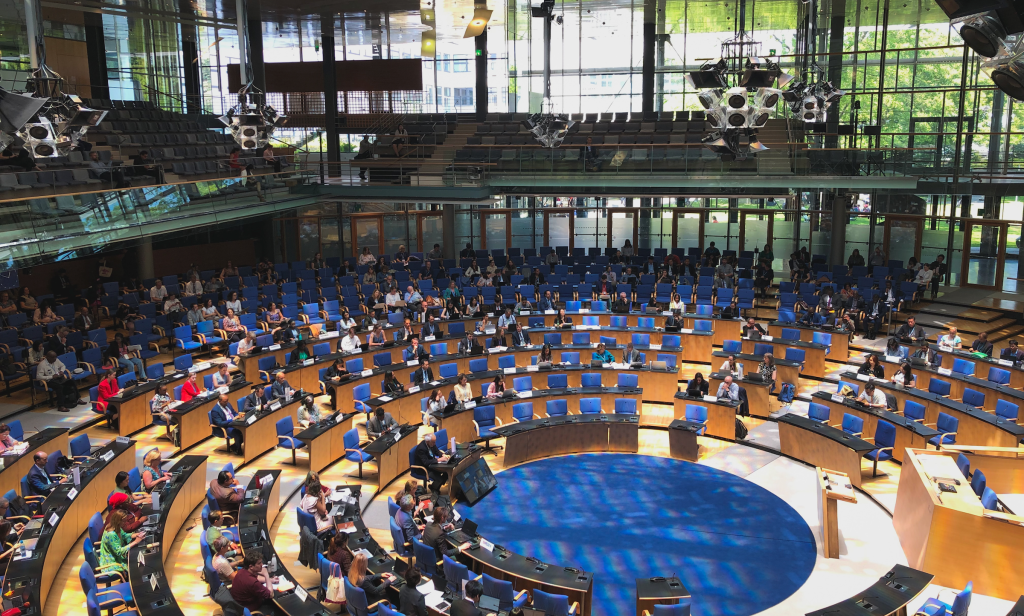

The United Nations Climate Change negotiations are inherently complex; they involve planetary systems, nearly 200 nations, and a stated purpose of “ensuring the integrity of all ecosystems, including in forests, the ocean, mountains and the cryosphere”. Those nearly 200 nations agreed in Paris in 2015 to align all financial flows with a shared project of preventing dangerous industrial climate disruption.
There is a core challenge at the heart of climate negotiations, a tension between the scientific fact that it is possible to stop destabilizing Earth’s climate and the political fact that some countries do not want to stop, because they earn a lot of money by doing it.
This leads to the next, and most obvious, controlling fact at the heart of the negotiations: By not stopping climate pollution, those countries—and banks and businesses—are making a choice to impose far-reaching, planet-altering harm on billions of innocent people. This is why the International Court of Justice found that national governments have a legally binding duty to act to prevent climate-related harm, both locally and at scale.
No one’s freedom is infringed by stopping pollution; freedom starts when pollution is kept away from you, your family, and your community.
Going forward, the UN Climate Change negotiations need to be engines of progress, in which real-world problem-solving is conducted in a collaborative way, to ensure climate-safe, enduring prosperity is available to everyone. If the process needs to evolve to make this possible, then it should evolve.
Climate progress is a measure of legitimacy.