How we get from uncertainty to resilient prosperity
In 2026, human beings returned to the Moon. The Artemis II mission carried four astronauts around the far side of the Moon and further from Earth than any human beings before them. For the first time in more than five decades, we could look up at the Moon and know that four of us were there, venturing to the edge of possibility for the benefit of science and our collective understanding of the planetary system where we have the cosmic good fortune to live.

To achieve lasting, shared, adaptive resilience, we will need to follow these principles in our rebuilding efforts:
- We are all future-builders.
- Health is a fabric of wellbeing and value.
- Resilience is a baseline imperative.
- Leave no one behind.
- Design to transcend crisis.
- Maximize integrative value creation.
The Principles for Reinventing Prosperity were published in September 2020, as guidance to G20 countries, after months of consultations through the early stages of the COVID-19 pandemic emergency. Six years later, we have not succeeded, as a community of nations, in rebuilding for a resilient, livable future. Economic injustice and geophysical instability have spread; food systems are under severe stress, and prices are rising faster than wages for nearly everyone on the planet.
In September, the United Nations Environment Programme published the report Limiting Overshoot – Navigating exceedance of 1.5°C and pathways towards return, in which it revealed that global heating has advanced to the point where we cannot avoid overshooting the 1.5ºC threshold, after which the dangerous impacts and compounding costs of climate disruption will become unmanageable. This Overshoot might happen before the year 2030—nearly 20 years sooner than most government policies aligned with ambitious climate action had assumed.
The report also finds we can halt and reverse this Overshoot, but there is no time to waste. Transformation must be universal and must start now, or we risk irreversible changes to structural elements of Earth’s climate system, which would preclude a return during our lifetimes, or for generations to come, to the favorable conditions our species has known for its entire existence.
Meanwhile, terrible conflicts not aligned with the principles of international law have spread and are threatening to undermine all nations’ ability to reliably defend, promote, and secure fundamental human rights and liberties. The stresses of this crisis in governance are pushing officials to make choices that cannot be justified by morality, law, or national interest.
In this year’s report, we detail four future scenarios in which all of the SDGs are working for the benefit of people in local context, while expanding economic opportunity for households, communities, and for diverse stakeholders across wider value chains. Banks and businesses, large and small, that identify ways to thrive in an SDG-driven economy will be of more value to everyone, and will have a clear advantage in the marketplace for innovative commercial enterprise.
Below is a condensed run-through of the four scenarios. The full report is available through the Climate Value Exchange.
Scenario 1: New Coast
The city of New Coast occupies a stretch of ocean shoreline where two major climate patterns converge. The spring and fall seasons come with intense changes in weather, sometimes from morning to night. Winds and waves batter the waterfront, and major storms are possible during 8 to 10 months of the year.

A history of industrial development, manufacturing, and petrochemical refining activities, has led to pollution being a part of life. Nearly everyone has lost relatives to some form of ill health realted to the effects of widespread, ongoing pollution.
A new generation of local authorities began to rebuild city policy around a shared insight: Unsustainable development was the big bet 100 years ago; sustainable development is the best bet for real prosperity and opportunity in our time.
The project would emphasize evidence and learning, ongoing processes of community engagement, restructuring of existing budget priorities, and expanded business opportunity rooted in community support, dedicated funding, optimized spending, and structurally reduced risk.
New Coast established new departments in city government, without increasing spending, focusing on:
- Auditing for quality of life improvements aligned with sustainable development;
- Aligning all line items in the city budget with the SDGs, while seeking as many co-benefits as possible;
- Ensuring policy, spending, and incident response establish conditions for ongoing resilience.
By realigning its existing budget allocations, to integrate sustainability and health-related improvements from everyday operations, New Coast was able to dedicate more funding to education, pollution reduction, and healthcare, while investing to green the city with vast new areas covered in trees and improved green spaces in parks and along waterfronts. These improvements had a near immediate impact in terms of attracting new investment, job creation, and development.
Scenario 2: Solid Ground
The small farming village of Solid Ground, on the outskirts of a sparsely populated rural county, in a developing country, has discovered a new standard for diversified, inclusive, sustainable rural development. The key was to put aside three aspects of conventional wisdom that were holding back progress:
- The prejudice that rural economies cannot innovate in ways that are investable and scalable;
- The assumption that small-scale actors are not capable of generating significant returns on investment for large-scale investors;
- The institutional predisposition to underinvest in technology and infrastructure in rural communities.
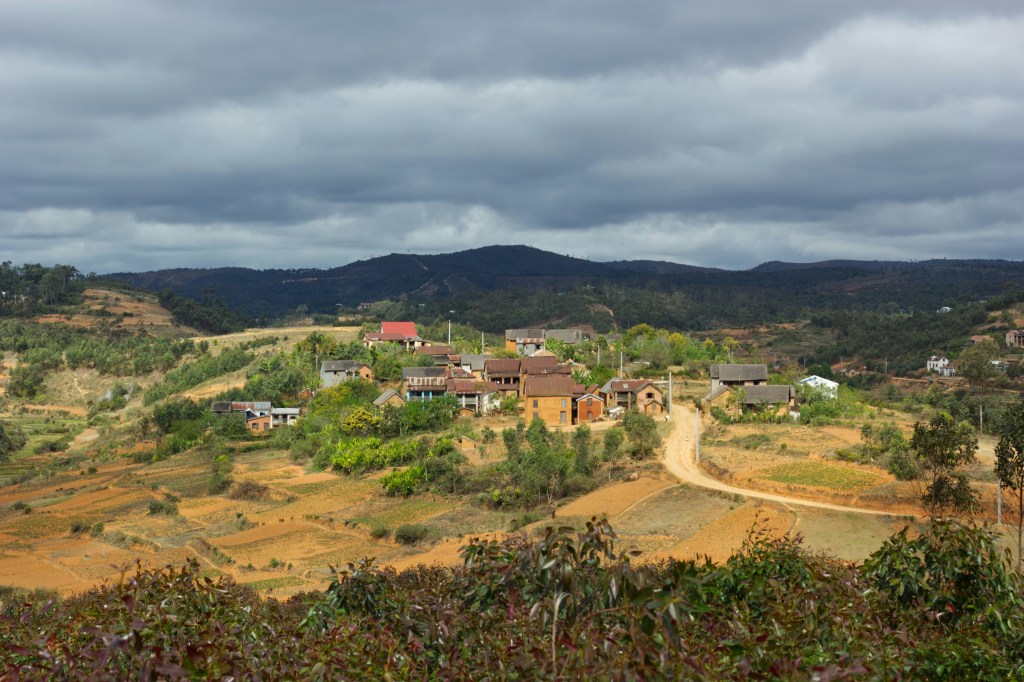
A group of town elders—all of whom are farmers who are either in the process of passing along their land to younger family members, or have already done so—insisted that farming should be the key to the future. Young people tended to agree, but on the condition that farming was more efficient and sustainable, less economically risky, and helped to connect the town to a wider national marketplace of new ideas.
Together, the Mentors and young innovators developed a list of priorities they believed could protect the rural “open air” way of life they all identified with, promote opportunities for better incomes linked to sustainable farming, and create a diversified local economy, where many of the services involved data, technology, and financial services supporting the transition to agroecological and regenerative practices.
The town council voted to establish a plan to do just that. It created a multigenerational Task Force that would look for ways to improve soil ecology and water supplies, while increasing production and diversifying cultivation. They would work with experts from universities, nonprofits and development agencies, and make a list of 10 new kinds of work young people could do that would set this new economy in motion.
Four of the 10 areas of work had to do with data—primarily Earth system data (soil, water, air quality, climate risk and impacts, etc.). An emphasis on developing richer soil ecology, providing the service of sinking carbon, and serving as an incubator for new business models, became a clear priority. Each of those activities could be paid for by development assistance, agricultural subsidies, or by consumer spending in local and regional markets.
A development agency worked with local authorities to design a specialized sovereign green bond that would bring national investment and private capital into this process. Within two years of the first discussion, the economic reinvention of the small village of Solid Ground became an underdog story that people elsewhere were cheering for.
Because the multigenerational Farmland Innovation Task Force, made up of elder-mentors, young innovators, and local public officials, had focused on an integrated approach to diversifying the rural economy, they were able to secure co-investments that supported wider development needs, including roads and bridges, warehouses and new home building. The FIT Force plan also ensured the village was able to avoid complicating impacts of rapid urbanization, by using insights from the incubator to match newcomers to reliable employment opportunities.
Scenario 3: Resolute
The small town of Resolute prizes its robust local government processes. A survey conducted by a local sociology student found 75% of residents had attended at least one town meeting in the last 2 years. Active local engagement had consistently been a source of efficiency in local problem-solving, but recent years had seen at least one costly climate-related event after another—storms, floods, drought, and a wildfire.

The costs were piling up, and the town was considering a new bond issue that would add significantly to future debt service payments. For the first time in many years, the town’s residents were about evenly divided on the need for and wisdom of a major decision.
Two business owners asked for a special meeting, before any vote on the bond, to propose a plan. Their idea was to look at green budgeting as a possible way to significantly upgrade local sustainability efforts, without spending a lot more money. They wanted to create an incentive program that would allow homes and businesses to invest in better practices.
Civic improvement teams were set up, including staff from multiple departments of city government, as well as residents and business owners. Each team was responsible for finding the most efficient way to allocate resources to specific goals.
The incentive program would be shaped by active input from all of the specific groups of stakeholders that would be affected. The town would dedicate some of its contractor allocations to incentives that would reward homeowners or business owners for making specific kinds of improvements.
The total amount of new investment from the incentive program and the green budgeting, over 10 years, was projected to be about 14% more than the proposed bond would have been, and it would come with no repayment or debt service costs. The major bond was rejected and a smaller bond focused on guaranteeing 5% of the needs for the incentive program was approved.
Scenario 4: Four Rivers County
Four Rivers County has been called by some variation of this name, in different languages, for thousands of years, because four prominent rivers originate or pass through the area. Three are major tributaries of the fourth, but two of these do not meet that river until hundreds of miles downstream. The Azure, Bison, and Cascade Rivers flow into the Quinnissung.

The Quinnissung flows into Quinnissung Bay, which is known for its richness of marine biodiversity. Along the coast, there are fishing communities, as well as other local economies specializing in crabbing, clamming, recreational uses and tourism, shipping, or offshore heavy industry. The Bay is more than 1,000 miles from Four Rivers County, but that is precisely what led to a fruitful multifaceted watershed-wide partnership.
- One industrial corporation focused on chemicals and materials agreed to support a multistakeholder bonding initiative that would provide funding for local water management, as well as for incubation of clean enterprise start-ups in Four Rivers County.
- An agribusiness leader committed $2 million per year for the first five years. That contribution would be matched by public financing, and clean practice service providers benefiting from the investments would supplement income from the new investments and related incentives.
- Four municipalities dedicated line items in their annual budgets to resourcing a regional innovation cooperative venture—a nonprofit that would provide paid services, using public funding and investment from the Watershed Partnership to reduce fees, to ensure near universal adoption across surrounding agricultural communities.
- Indigenous communities organized an informal insight-sharing assembly, in which they highlighted historical understanding of the landscape of the region.
- In the city of Cascade, a cooperative was established that focused on channeling traditional knowledge into science-based approaches to agroecology, forest management, and to proposals for Rights of Nature legislation to protect bodies of water, including the four rivers and smaller tributaries.
- Four Rivers County chartered a public development bank, with a mandate to provide low-cost concessionary financing to local small businesses and nonprofit groups working to deepen connections between communities and practitioners across the Quinnissung watershed.
Within five years, the Four Rivers Watershed Partnership, its various funding initiatives, and the Four Rivers County Bank, secured more than $920 million in new private investment for agroecological and regenerative land use practices between the City of Cascade and the shore towns along the Quinnissung Bay. Soil ecology, carbon capture, water supply resilience, air and water quality, and incomes, all surpassed the initial benchmarks called for in the Watershed Partnership’s founding agreement.
Getting to Work
We recognize that four ambitious fictional scenarios, with highly positive outcomes, do not automatically set change in motion. These scenarios are thoughtful inventions intended to reflect ongoing input from stakeholders from the Earth Civics and Climate Value networks, with honest consideration of the best available scientific evidence about what is needed and what is possible, in light of the stated goals and targets laid out in the 2015 agreement known as the Sustainable Development Goals.
Ongoing engagement with stakeholders in local communities around the world continues to yield the same results that showed up so decisively in the My World Survey of more than 8 million people, across 174 countries, conducted by the UN Development Programme, which informed international negotiations around the Sustainable Development Goals. Those consistent findings are:
- For most people, the SDGs represent common-sense plans for societal success.
- When you live with the effects of a decision about public policy or private investment, you want good outcomes to be sustained over time, and harmful practices to lose favor.
- ‘Decent work’ (SDG10) is not just about work that pays well and is dignified in a general way; people want to be active contributors to making the world a better place.
- There is no logical reason why high-value investments should have destructive impacts.
- The rights and dignity of all people should be of concern to high-level decision-makers, at all times.
- A healthy, clean environment, affordable food, and sustainable public health and opportunity are core aspirations of any organized society.
To work toward futures in which such layered, multidimensional progress is active in everyday life, leaders and institutions at all levels should seek input from stakeholders. When those who will live with innovations help to inform their design, solutions gain the benefit of practical application, local roots, cultural relevance, and more scalable marketability.

The Earth Civics Toolkit is designed to provide diverse groups of neighbors and aligned stakeholders to organize policy-focused meetings that work toward a climate-resilient future.
Conclusion
Climate disruption is intensifying, with each increment of additional global heating. Scientific observation shows we will breach the 1.5ºC threshold for dangerous global heating in coming years. There is no reason we should submit to the flawed thinking that the worst is inevitable. While we are far behind the timeline for averting dangerous ongoing climate crisis, the future will be shaped by our choices and how we act on them.
To make the right choices, we will need to recognize and reward cooperative innovation, environmental stewardship, investments in climate resilience, and the primacy of human rights over any and all desires of those who hold uncommon power and influence. We must stop pretending that our founding laws do not already require honorable service to human rights and future generations; they do.
New institutions can be engines of progress for integral, sustainable human development. To play this role, effectively and consistently through time, however, new institutions will have to be adaptable and evolutionary, while being mission-driven and consistent in their values and their delivery of intended benefits and co-benefits. What this means is decision-making must remain locally rooted and contextual, without allowing barriers to new thinking to block progress or meaningful innovation.
It is in the differences between perspectives that it becomes possible to identify the boldest and most useful breakthroughs. To find such moments of clarity requires consideration of the best-available science and evidence alongside detailed competing persepctives, with cooperative problem-solving as the priority.
We are deeper into the industrial unsustainability crisis than ever, and yet, we have more tools for addressing it than ever. An intelligent combination of those best tools, with instructive local insights, shared sustainability goals, and real cooperative investment in new and emerging practices, can bring new economic opportunity to both affluent cities and vulnerable outlying areas.
Start conversations. Realign spending. Support small-scale innovators. Ask questions about structural constraints, and ask them again. Consult stakeholders. Start wherever you need to, and keep each step relevant to everyone who will be affected.