
Today is World Food Day.
Food security is under stress in all regions.
The reasons are well-known and well-documented. In short: Climate disruption, conflict, cascade effects, and ever-rising costs.
This week, the 2026 State of the Climate Report warned:
“We are witnessing the rapid destabilization of the Earth’s climate system. This is no longer a warning for the future; it is a dianosis of the present… Climate change is increasingly interacting with global biodiversity loss, freshwater stress, food insecurity, pathogens, and geopolitical instability, amplifying risks across interconnected human and natural systems.”
Food production is projected to decline by 14% by 2050, even as population grows.
Realigning less than 1% of the $15.4 trillion wasted every year due to unsustainable practices would give us a life-saving, world-building surge in transformational food-related investments.
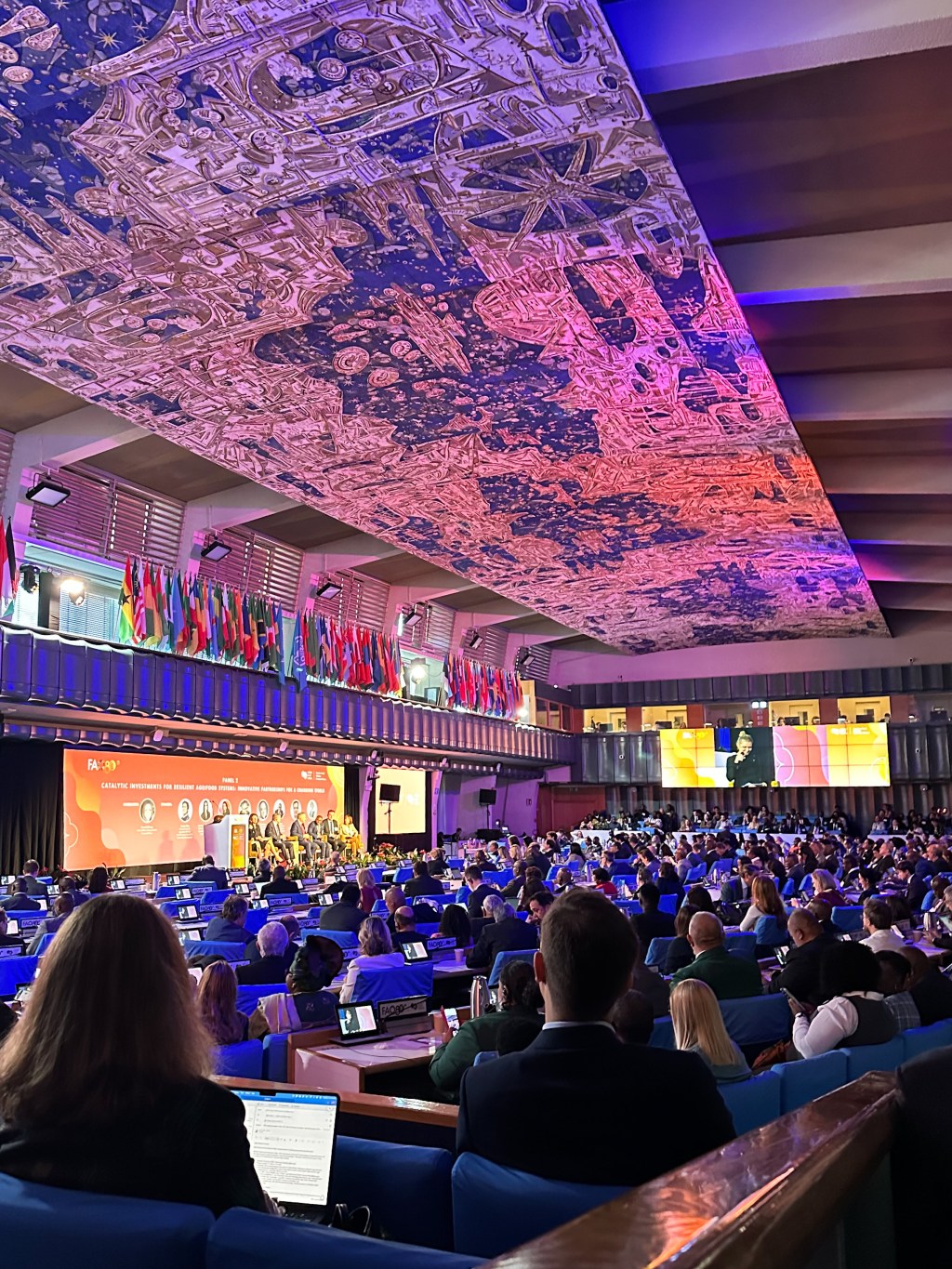
This week the UN Food and Agriculture Organization hosted the World Food Forum, in Rome, emphasizing innovation today to nourish the future.
FAO recognized intentionally that innovation includes new policies and business models that adapt traditional knowledge to new context, to farm sustainably, and community-led initiatives that build resilience and restore Nature, while improving lives and livelihoods in rural communities. The Forum connected food finance institutions and investors with innovators and country platforms for sustainable food systems. Through dialogue, reporting, and knowledge sharing, it mapped a landscape of possibility from scaling of indigenous crops and methods to data systems that reward small-scale farmers for keeping water clean, protecting forests and restoring soils.
Finance that reaches and uplifts the vulnerable, leveraging climate intelligence and supporting “better standards of life in larger freedom”—as the UN Charter calls for—can create the most prosperous and secure future for all.
We must harness this opportunity.