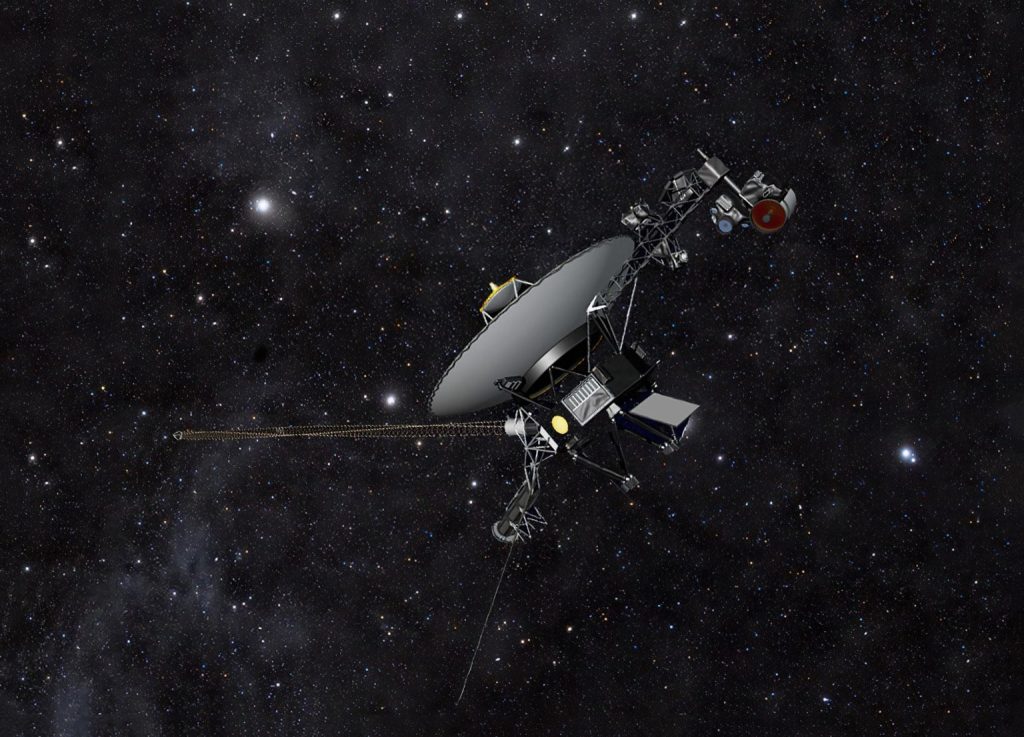

The Voyager 1 spacecraft, launched by NASA in 1977, reached a distance of 1 light day, shortly after 5:16 am EST, this morning. It took the craft 49 years to reach the distance light travels in 24 hours. For perspective, the Moon is 186,000 miles away, on average, and light takes just over 1 second to reach it. The Sun is about 8 light minutes from Earth, or 93 million miles.
Voyager 1 is the first human-made device to reach this cosmic milestone, and is expected to continue to operate for at least 2 more years. Its companion, Voyager 2, is the only other human-made device to exit the Heliosphere, our Sun’s zone of influence. The two craft are now traveling in interstellar space, running on a plutonium fuel supply, and continue to send back sensor data.
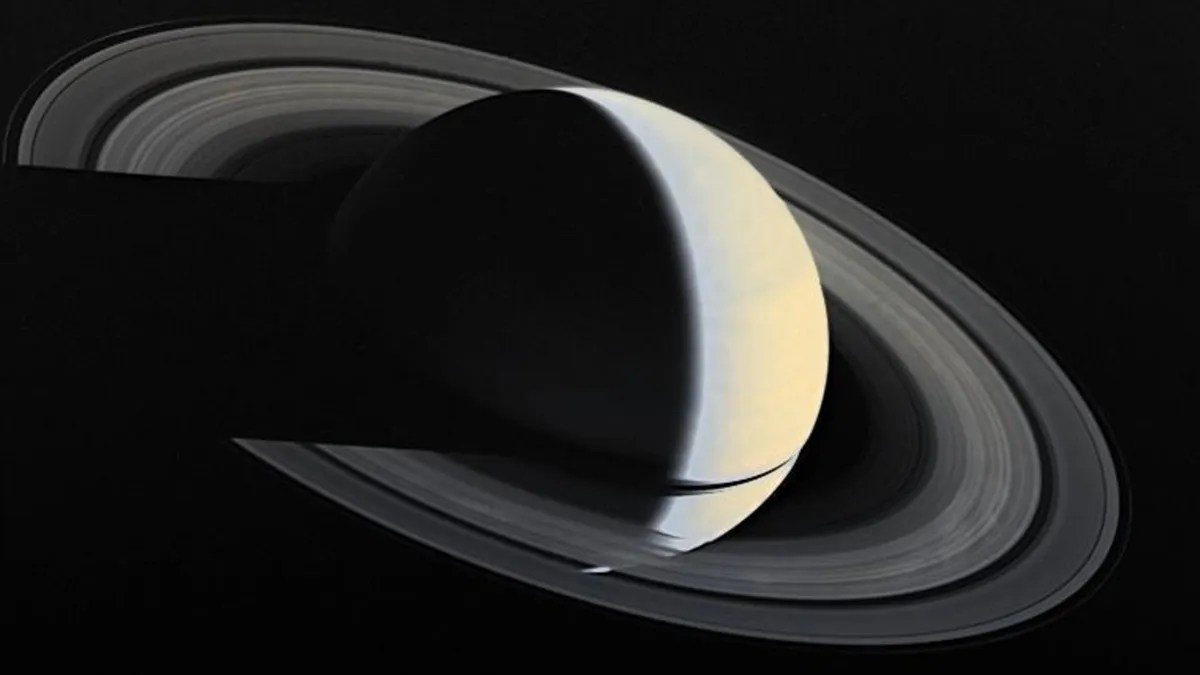
Voyager 1 achieved its primary mission objectives in 1979 and 1980, when it made closes approaches to Jupiter and Saturn, respectively. Voyager 1 photographed Saturn up close, discovered a 7th ring and 5 new moons, and far outlived its original mission horizon. On January 1, 1990, Voyager 1 began its new, extended mission, to begin exploration of interstellar space, after it became clear its power source and onboard systems would continue to operate as it raced toward the outer Solar System.
In February 1998, Voyager 1 became the most distant human-made object, after overtaking NASA’s Pioneer 10 craft. In August 2006, Voyager 1 reached a distance of 100 AU (astronomical units, the distance between the Earth and the Sun). In August 2022, Voyager 1 crossed the Heliopause, the outer edge of the Sun’s material influence, and entered interstellar space.
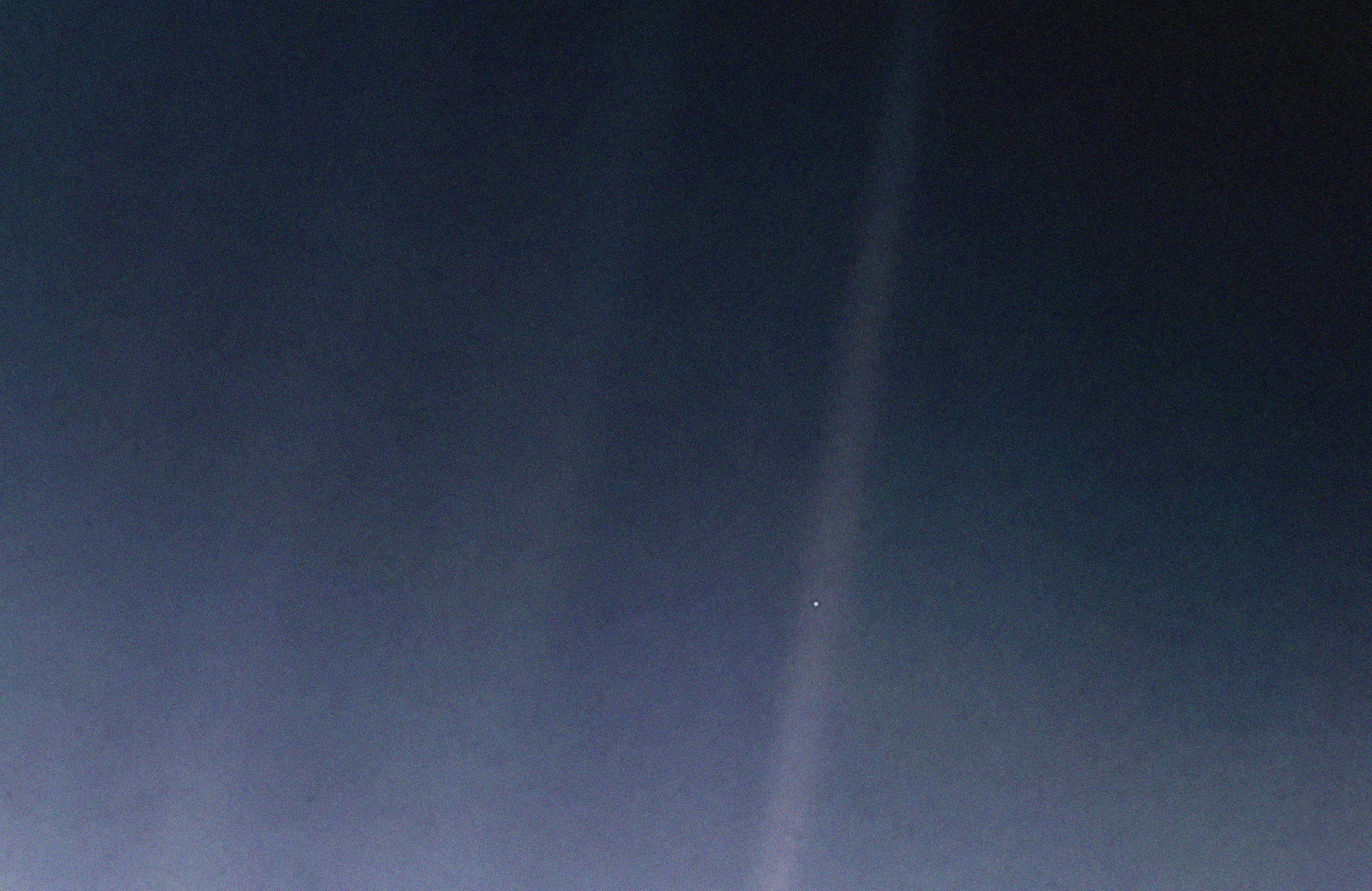
Voyager 1 is now roughly 16.1 billion miles from Earth. Each command sent to it, traveling at light speed, will take more than 24 hours to reach it, and each signal sent back will take more than 24 hours to return to Earth. NASA notes the distance between Mars and Earth changes as they follow their respective orbits around the Sun, so the distance can range between 3 light minutes to 22 light minutes. Neptune, the most distant full planet in our Solar System is on average 4 light hours from Earth.
While Voyager 1 is now traveling in and studying the dynamics of interstellar space, it has still not reached the inner edge of the Oort Cloud, the vast realm of icy bodies encircling the Solar System, where it is believed most comets originate. The inner edge of the Oort Cloud is theorized to lie at about 0.03 light years, or 11 light days from the Sun. If Voyager’s speed remains constant, it would reach that distance in the year 2416.
Beyond the orbit of Neptune, and before the Oort Cloud, there are trillions of icy worlds that comprise the outer layers of the Solar System. These Trans-Neptunian Objects (TNOs) make up the Kuiper Belt, where the dwarf planets Pluto, Eris, Haumea, and Makemake orbit, and a region of long-orbiting objects known as the Scattered Disc.
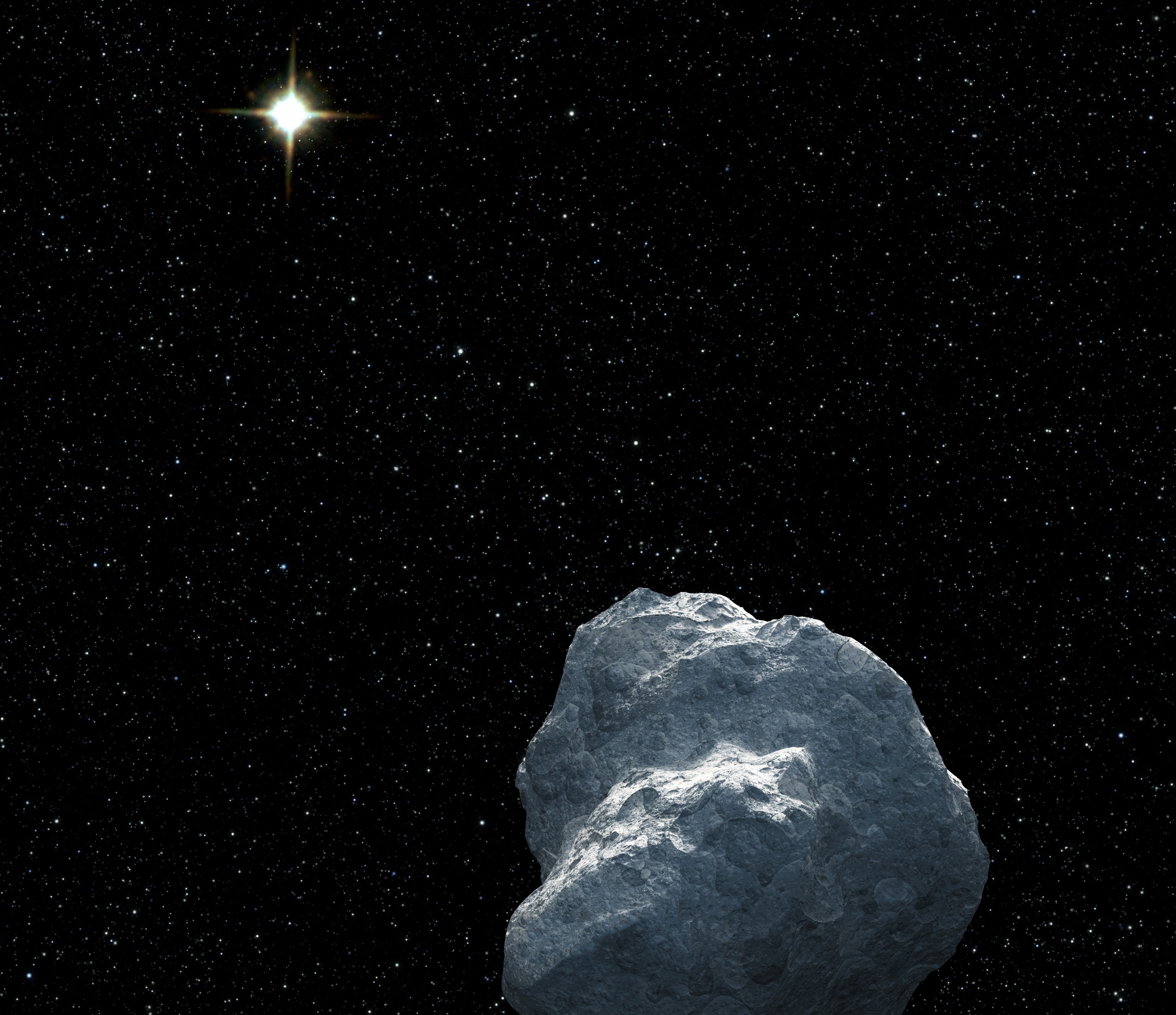
Beyond this, one of the most distant dwarf planets ever detected, Sedna, occupies a region that is difficult to observe and more irregular than the Scattered Disc. Sedna’s orbit ranges between 937 AU and 76 AU. It was discovered in 2003 at around 90 AU and is currently at 83 AU, moving toward perihelion (its closest approach to the Sun) in 2075. Once Sedna rounds the Sun and heads back out beyond the Kuiper Belt, it will not reach perihelion again for 11,000 years.
The region between the Kuiper Belt and the Oort Cloud is thought to be populated by more “sednoids”—dwarf planets, rogue moons, comets, and smaller frozen objects with long, lopsided orbits. In terms of distance, Voyager 1 is now in the realm of the sednoids, but it is not near any documented Solar System object.
That is because Voyager is climbing steeply out of the ecliptic plane (where most worlds orbit the Sun, even at great distance) toward the constellation Ursa Minor (heading toward the star Gliese 445, which it will pass ~1.7 light-years from in about 40,000 years), on a hyperbolic, unbound escape trajectory.
In this vast empty stretch of the outer Solar System, it is likely there is no celestial object closer to Voyager than the Earth is to the Sun. What science suggests, however, is that there is likely at least one sednoid or Oort Cloud object tracing a long orbit within about 10 AU from Voyager. Voyager’s instruments are not designed to detect or transmit information about kilometer-scale frozen objects drifting in the dark, so we will not know if one passes.
For as long as its instruments keep working, Voyager will take measurements of the interstellar medium, and send data back to Earth, giving us our most up-close detailed picture of the physical composition of the space between stars in our galaxy.